I recently returned from a liveaboard trip. For the purpose of this story, where it happened and who operated the vessel are not important. Naming the operator would make this about them, and that is too easy.
This story is about me. But not only me.
I have spent most of my professional career teaching people to stay vigilant. Human factors, risk management, gas planning, team awareness, decision making, normalization of deviance. These are not abstract concepts to me. I talk about them, teach them, and look for them in others.
Then I went on holiday and did exactly what I warn people about.
I boarded the vessel in vacation mode. I had paid good money to dive with what appeared to be a reputable operator, and for once I did not want to be the person constantly looking for problems. I wanted to enjoy simple recreational diving with my buddy, switch off a little, and trust that the operation around me was doing what it was supposed to do.
My dive buddy had not been diving for several years, so before the trip she completed a refresher with me. She did well. Really well. Her buoyancy was decent, her awareness was decent, most importantly, she was comfortable in the water. That made the diving easy, and easy diving lowers your workload. It creates comfort. It makes you relax.
The liveaboard offered a Nitrox package. On the first day I analyzed both my cylinders and my buddy’s cylinders for all three dives using my own oxygen analyzer I brought. Everything came back as expected. The vessel was using a Nitrox membrane system, and those systems are generally consistent unless someone changes the pressure or settings. Most divers want around 32%, and that is what we were getting.
By the second day I stopped analyzing.
At the time, that decision felt reasonable. The dives were not deep. We stayed above 30 meters and well inside no decompression limits, even compared to diving on air.
A membrane system should not suddenly produce a dangerous oxygen percentage without someone interfering with it. Besides they were checking the cylinders for us. (They showed us the logs for this). In my head, the risk was low enough that I stopped checking.
Before the trip I had also decided to travel lighter than usual. Anyone who knows me knows I normally overpack, especially when I am teaching in remote places. I like having spare O-rings, tools, oxygen cells, backup parts to build half a rebreather, analyzers, and anything else that might save an expedition or a course. It is annoying when traveling, but it has saved me more than once.
This time I told myself it was just a recreational trip. I left the usual mountain of spares at home, including my DE-OX carbon monoxide analyzer.
Why bring it?
The company had a strong reputation. The vessel was booked for 2 years solid. Guests spoke highly of them. I had paid for a professional service.
"So, I trusted the system."
During the trip I found myself listening to other divers talk. There were conversations about "magically" running out of gas, people doing questionable things, and the usual holiday dive stories. A younger version of me would probably have inserted himself into every questionable dive story with an unsolicited opinion, most likely with too much confidence and too little invitation. These days I try to pick my battles. You can’t save them all. Sorry.
My buddy, however, was curious and around the same time, the Maldives cave incident, resulting in the deaths of 5 divers, had been in the news, and I had already been asked many questions about it. That led to a conversation about gas planning, SAC rate calculations, reserves, and why just looking at the pressure gauge when it feels convenient is not the same as planning a dive. Other guests became interested and joined the discussion. It became one of those informal teaching moments that I actually enjoy. One thing led to another and one of the guests asked me why his regulator breathed wet whenever he was upside down.
I heard the question. I even remember thinking about it. Then I let it go.
I primarily dive closed circuit rebreather, and wet breathing regulators are not something I spend much time thinking about. I also don't dive upside down most of the time. Regardless, there are many reasons why this could happen. But I was in holiday mode and a few beers into the evening, so the comment passed through my mind without sticking.
The next day another guest complained about a headache and skipped dinner as he was tired. Another guest felt nauseous, but he was already dealing with motion sickness. All of it had an explanation if you wanted one badly enough. Nothing felt urgent. Nothing was dramatic enough to force action.
And to be honest, the crew had not exactly earned blind trust by that point.
There were already things that felt sloppy. Briefings that did not inspire confidence. Explanations that sounded more convenient than accurate. A general sense that the operation was running because it always ran, not because every part of it was being actively managed. I noticed it, but I filed it away as the usual imperfections you sometimes see on liveaboards. Not ideal, but not unusual either.
"That is the uncomfortable part. I saw enough to know I should have been more alert, and I still chose to ignore it."
The day before the incident we had already aborted a dive after hearing four very loud explosions underwater from dynamite fishing. These were not vague sounds in the distance. I could feel them hitting my chest. The dive guide tried to gaslight us, stating it as geological activity. When we surfaced, we could see a fishing boat about 1 or 2 miles away. Far enough away to not be an immediate threat, but close enough for the explanation to be felt.
Most of the dive groups continued diving because their guides didn’t act. I aborted the dive. My buddy was confused and uncomfortable about the feeling. She had no idea what fish bombing was and got really upset nobody acted. Understandable.
The following day we were supposed to dive a “wreck”. As wrecks go, this one was not exactly exciting. It was more of a pile of wooden rubble than a proper overhead environment, but because I enjoy wrecks I decided to have a look around. I found the only small opening that looked mildly interesting and poked my head inside. For this I needed to be upside down.
The moment I went head down, something felt wrong.
My regulator breathed wet. Then I noticed the taste. It was nasty. One the second breath I heard a gurgling sound coming from my first stage. It was gurgling oil.
My mind went into overdrive.
The first thing I felt was anger. At first not at the crew, although by that point I had very little patience left for them. I was angry at myself, because suddenly the previous few days started replaying in my head:
- The wet breathing regulator.
- The headache.
- The nausea.
- The poor explanations.
- The weak briefings.
- The explosions underwater.
- The decision to stop analyzing.
- The decision to leave the CO analyzer at home.
"The trust I had placed in people who had already shown me reasons not to trust them blindly."
The second thought that went in to my mind was worse. Not only I had compromised my own safety, and I had compromised the safety of my buddy. She trusted me. I was the experienced one. I was the one who should have been paying attention.
I immediately aborted the dive.
My buddy was confused, and that was on me as well. To her, the abort came out of nowhere. To me, the dive was already finished. How does one explain the situation underwater? I mean, Is she in imminent danger of breathing contaminated gas at elevated pressures?
Back on the dive boat, I disassembled the equipment and turned the cylinder upside down.
Oil and moisture came out. Far more than I expected. It should have been dry gas, but instead yellow liquid was gushing out of the valve. It was genuinely sickening.
The cruise director was informed. I asked questions and requested information about the filter condition, but I did not receive the answers I requested. There was no clear management of the situation, no confidence, no proper explanation, and no sense that anyone was prepared for what should happen next. I was told that the filter was changed a week ago. Now anyone that says that without being able to produce evidence for this is lying. There I said it.
At that point I told my buddy that, from my perspective, it was no longer safe to continue diving.
What bothered me almost as much as the contamination was what I did next.
I kept most of the information to myself.
I did not want to create panic on the liveaboard. I did not want to ruin anyone’s holiday. I did not want to become the centre of attention or turn the trip into a confrontation. Part of me still wanted to manage the situation quietly, even though another part of me knew how serious it was.
That is another place where things go wrong.
Not in the compressor room. Not in the filter stack that clearly failed. Not in the dive briefing.
"It went wrong because of the social pressure that makes people stay quiet."
Later, when I went back to my room, my mind was still racing. If the breathing gas was contaminated and the response to it was this poor, what else had we all assumed was safe?
For a moment I transformed into a 12 year old kid and without thinking, I pressed the test button on the fire alarm in the cabin. I mean why not.
Nothing happened.
No sound. No alarm. Nothing.
That moment stayed with me because it was the whole trip in one button press.
Everyone assumes the fire alarm works. Everyone assumes the compressor is maintained. Everyone assumes the filters are changed. Everyone assumes the gas is clean. Everyone assumes the guide cares. Everyone assumes the cruise director has a plan. Everyone assumes the operator is competent because the vessel is full and the reviews are good.
"And the uncomfortable truth is that I was part of that everyone"
So where else does this go wrong?
- It goes wrong when a compressor log is treated as paperwork instead of a life support record.
- It goes wrong when a guide gives an explanation that sounds convenient and the guests accept it because challenging it would be uncomfortable.
- It goes wrong when divers assume reputation equals safety.
- It goes wrong when instructors stop asking basic questions because they are on holiday.
- It goes wrong when companies cut corners and not endorse a safety culture.
- It goes wrong when maintenance becomes something people believe happened because a form says so.
It also goes wrong when someone sees all of this and still chooses to keep the peace.
That someone was me, and while I am when writing this I feel conflicted about this.
The answer is not to walk through life assuming everyone is incompetent. That is not practical, and it is not healthy.
But the answer is also not blind trust because a company has a good reputation, fully booked, and a liveaboard full of happy guests. We might never know, think about this; what if all those "happy guests and professionals that joined prior to us" just "dodged" a bullet and never knew about it?
"We need to make verification normal again."
Analyze your gas. Period. Ask about the compressor condition. Even looking at it will give you hints. Look at the filter log.
Challenge explanations that do not make sense. Speak up when something feels off. Test the alarm (Please use common sense and mae sure you don't end up in jail). Abort the dive without feeling guilty.
"We need to create a culture where questions are not treated as attacks and where safety is not something we assume because the seemingly the crew and reputation looks professional."
Obviously some of this is very complicated. Most divers simply are not equipped with the knowledge to identify a lot of these problems.
"Is that their fault, or does our beloved industry just hang together with "trust me", we have this under control?"
My take:
- Operators need to understand that reputation is not a control measure.
- Crew, regardless of their position, need to understand that being challenged is part of operating in a life support environment.
- Divers need to understand that paying for a service does not remove personal responsibility.
"The lesson is not that I was complacent and therefore I failed."
The lesson is that I was complacent in a system that made complacency easy.
The crew were not doing a good job. The warning signs were there. The explanations were weak. The response was poor.
"Yet, I ignored enough of it to become part of the problem"
That is the part that matters.
"Complacency is rarely one person doing one stupid thing. It is usually a collection of people accepting things they should question, but don’t, because questioning them is inconvenient."
Then one day your complacency catches up with you. You take a breath, taste oil, and realize the problem was not just the compressor.
- The problem was the system.
- The problem was the assumptions.
- The problem was us.
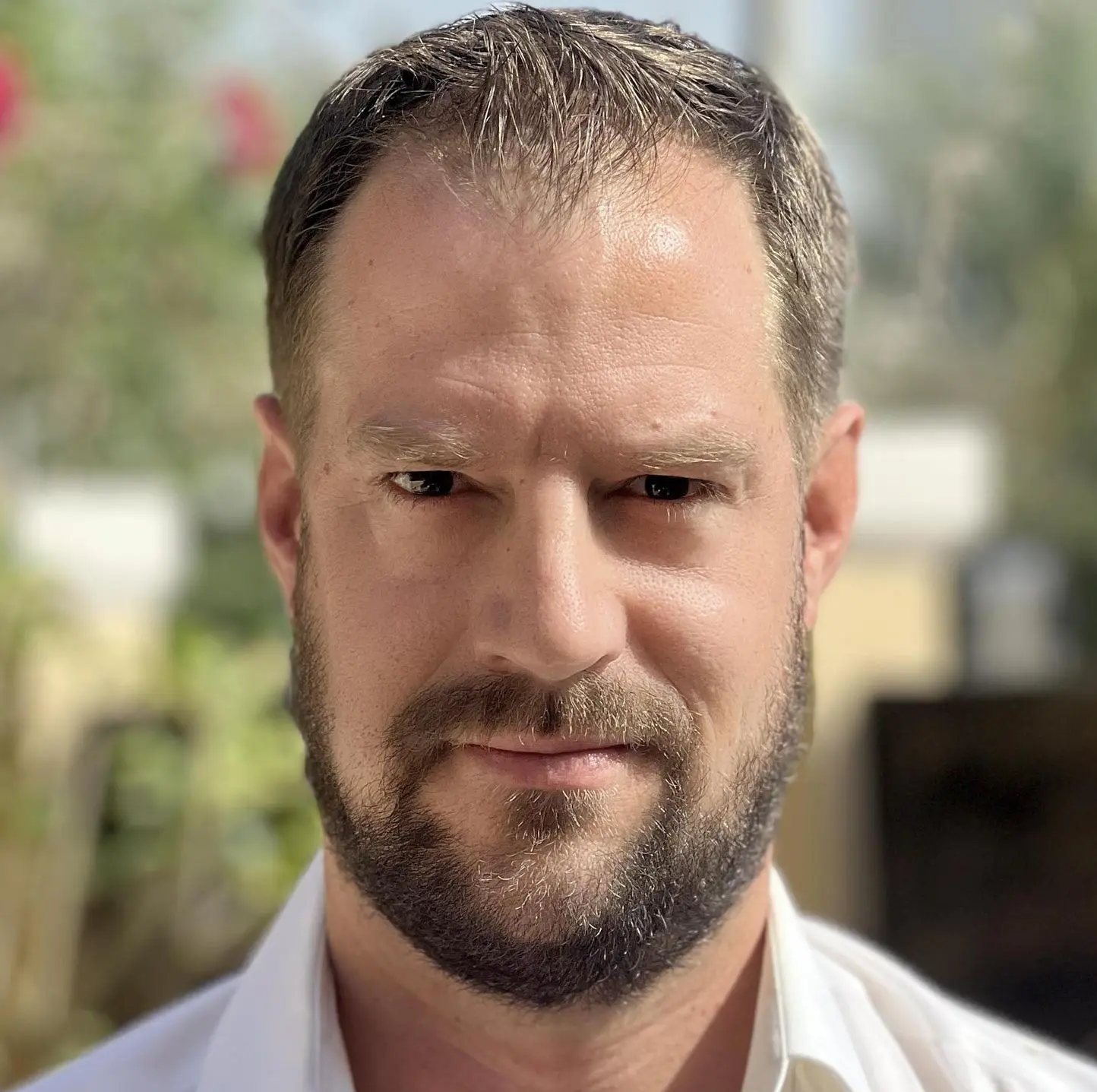
Paul Emous
Program Director | Security Advisor | Technical Extended Range Instructor Trainer
Focused on mission-critical IT, digital transformation, and sovereign system design. He leads complex multi-prime environments across Europe and the Middle East, acting as a neutral authority to de-risk delivery and ensure predictable outcomes.
Separately, Paul is a Technical Extended Range Instructor Trainer and expedition leader in advanced and remote diving. He teaches Just Culture and decision-making under pressure, where risk is real and accountability is absolute.
Contact: paul@mousemedia.nl